Websites for electricians: what yours needs to win local work in 2026
Most electricians get their work from recommendations, and plenty are busy without a website. But the work that pays best, such as rewires, consumer unit upgrades, EV chargers and landlord contracts, often comes from people who search first. This guide covers what an electrician's website needs to win that work, written for one van sparkies and small teams across the UK.
What people actually search for
Customers don't search for "electrical contractor". They search for the job they need doing, usually with a place on the end:
electrician near me
emergency electrician
EICR for landlords
consumer unit upgrade or fuse box replacement
EV charger installer
rewire cost
outdoor lighting or sockets
If your website only says "all aspects of electrical work undertaken", Google has nothing to match against those searches. Give each of your main jobs its own section, or better its own page, written the way customers say it.
Show the accreditations that matter
People letting a stranger work on their electrics want reassurance quickly. Put these near the top, not buried on an "about" page:
Your competent person scheme, such as NICEIC or NAPIT, with your registration number. Customers can look you up on the scheme's own website, and many do.
That you can self certify notifiable work under Part P of the Building Regulations, if you're registered to.
Your insurance, such as public liability.
Any other schemes, such as TrustMark.
Link to the scheme's checker if you can. It's a two second way to prove you're who you say you are.
Landlords are a market of their own
In England, the Electrical Safety Standards in the Private Rented Sector Regulations 2020 mean landlords need an EICR at least every five years. That's steady, repeat work, and landlords and letting agents search for it.
A section or page on EICRs should cover who needs one, how long it takes, what happens if remedial work is needed and how quickly you can send the report. Mention that you can work with tenants to arrange access. Landlords care about that more than almost anything else.
Emergency work needs its own setup
We recently came across a 24 hour electrician with no website at all. At 2am, with the power out, nobody asks a Facebook group for a recommendation. They search "emergency electrician near me" and ring whoever shows up first.
If you do emergency callouts:
Say so at the top of the site, with the hours you actually cover.
Make the call button big and impossible to miss on a phone.
Have something reply when you can't answer, such as a missed call text back, because you'll often be on another job when the next one rings.
Let people send the job with photos
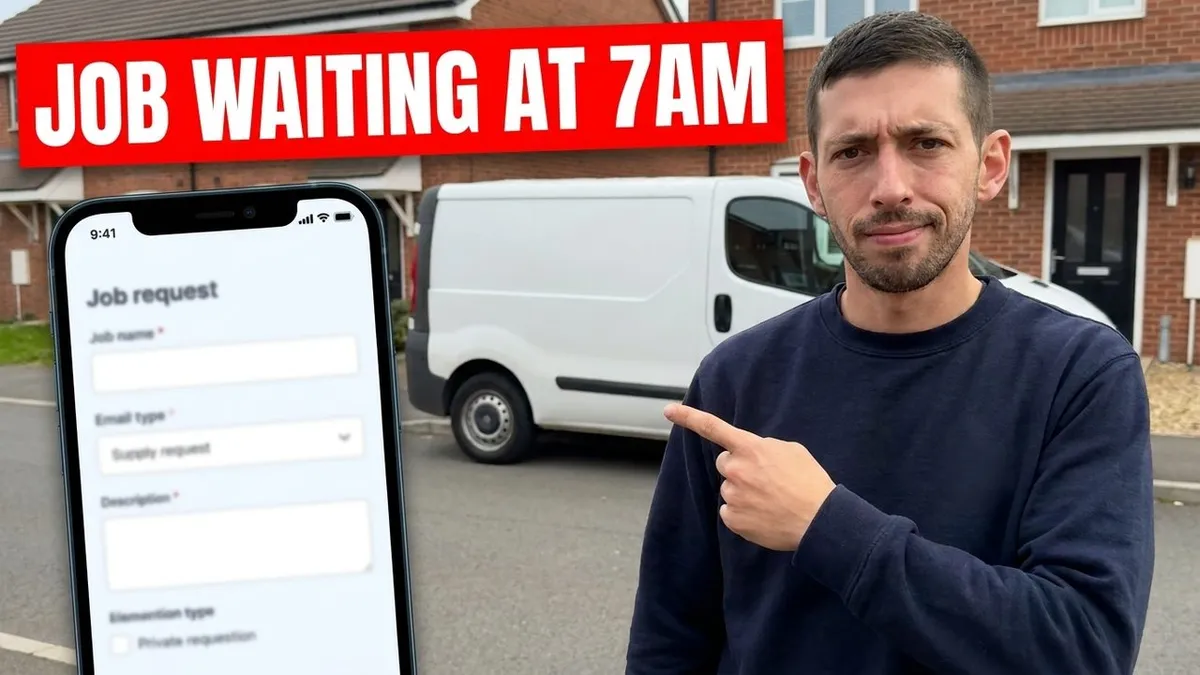
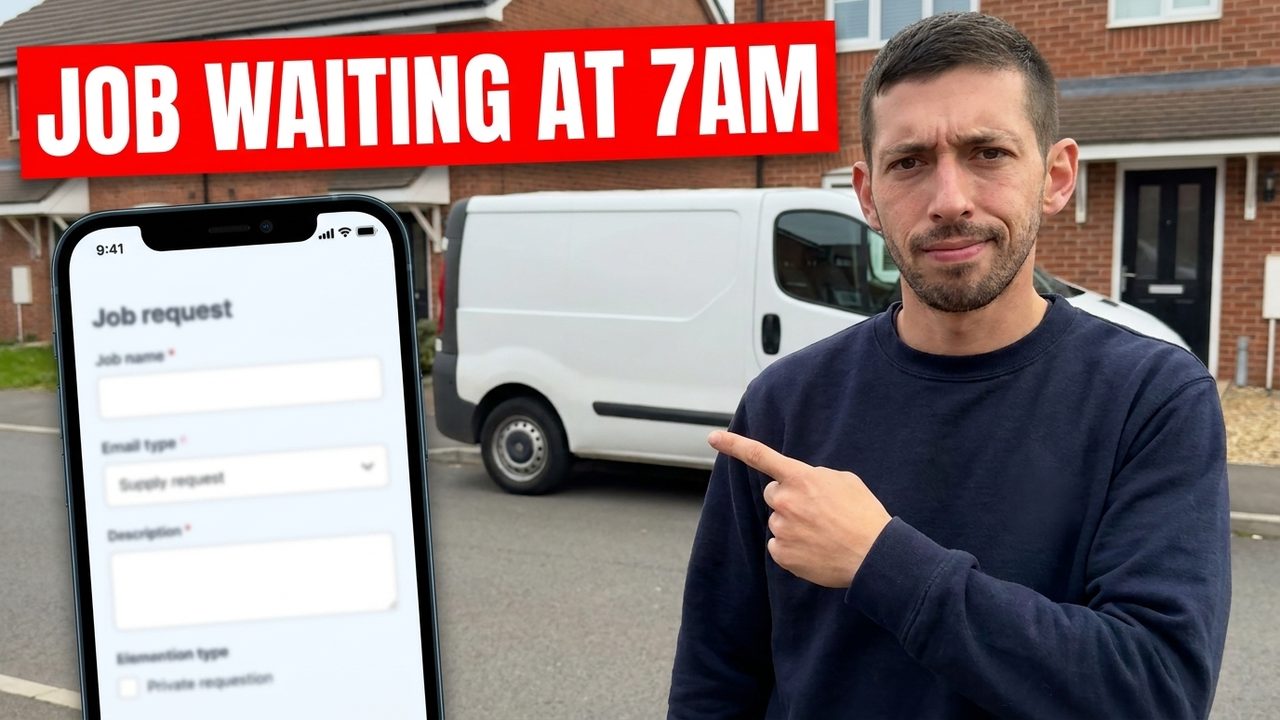
A photo of a fuse board tells you more than five minutes on the phone. A job request form that asks for a photo, the postcode, the type of property and what's wrong saves you a wasted visit and helps you price faster.
Watch it: the job request form, and the booked job waiting when you wake up.
It also catches the people looking at 9pm who would never ring that late. More on that in why "call for a quote" loses at 10pm.
The mistakes we keep finding
When we look at electricians' websites and listings, the same few things come up:
Contact details that don't work. We came across an electrician's flyer with an email address on a web domain that isn't even registered, so every email bounces. Send yourself an email from your own details today.
No towns named. If you cover Medway, Maidstone and the villages around them, say so, by name.
Old photos or none. Before and after photos of tidy consumer units and neat cable runs do more selling than any paragraph. There are tips in how to photograph your work.
No reviews on show. Your Google reviews belong on your website too.
A site that's slow or fiddly on a phone. Most of your visitors are on one.
The pages a typical electrician's site needs
Home: your trade, your towns, a tap to call button, your scheme logo and your review rating on the first screen.
Services: one section each for your main jobs, such as rewires, consumer units, EICRs, EV chargers, lighting and fault finding.
Areas: the towns and villages you cover.
Reviews and photos: real jobs, real customers.
Contact: phone, the job request form and your hours.
EV chargers, rewires and the bigger jobs
The jobs that pay best tend to be the ones people research first. Someone planning a full rewire, a consumer unit upgrade or an EV charger will usually read a few websites, compare reviews and contact two or three electricians before they decide.
For those jobs, a section on your site should cover:
What's involved, in plain words. How long it takes, whether they'll need to move out of rooms, how much mess there is.
What affects the price, such as the size of the property, the age of the existing wiring or how far the charger is from the consumer unit.
What they get at the end, such as the certificate and any warranty.
Photos of jobs you've done.
You don't need to give a fixed price, but a typical range or a "from" price helps people decide whether to get in touch.
Writing a service section that works
Here's the shape of a good one, using a consumer unit as the example:
"Consumer unit upgrades in Medway and Maidstone. If your fuse box still has old rewireable fuses, or keeps tripping, it might be time for a new consumer unit. Most upgrades take a day. We'll test the circuits, fit the new unit and give you the certificate. NICEIC registered. Send us a photo of your current board for a quick idea of cost."
It names the job and the towns, says what's involved, mentions the accreditation and gives a simple next step. Do that for each of your main jobs and your site will match far more of what people search for.
Questions electricians ask
Do electricians need a website?
Not if every job comes from people who already know you. If you want landlord work, EV chargers or bigger jobs from people who search first, a website with your scheme registration and reviews on it makes a real difference.
What should an electrician put on their website?
The jobs you do in customers' words, the towns you cover, your NICEIC or NAPIT registration, your reviews, real photos of your work and an easy way to call or send a job with photos.
How do landlords find an electrician for an EICR?
Most search online or ask their letting agent. A page that explains EICRs clearly, says how quickly you send the report and mentions working with tenants on access gives them what they're looking for.
Should I show my registration number on my website?
Yes. It lets customers check you on the scheme's register in seconds, and it's one of the quickest ways to build trust.
We build websites and the system behind them for UK trades. See what we set up for electricians, or the pricing page: Basic is £99 a month with no setup fee and no contract.
