Is a website still worth it for a tradesman in 2026? An honest answer
It's a fair question. Plenty of trades are busy without a website. Work comes from word of mouth, a Facebook page, a few directory listings and the van parked outside a job. So is a website still worth it in 2026, or is it one more bill?
Here's an honest answer, including when you genuinely don't need one.
When you probably don't need a website
You can skip it if all of these are true:
You're booked solid weeks or months ahead and turning work away.
Every job comes through people who already know you.
You don't want to grow, take on staff or move into better paid work.
You're happy for the business to stop when you do.
If that's you, keep doing what you're doing. A website won't change much.
Why most trades still need one
For everyone else, the website isn't really about strangers finding you. It's about what happens after somebody hears your name.
Word of mouth gets checked. When a neighbour recommends you, the first thing most people do is search your name. If nothing comes up, or just a Facebook page with three posts from 2022, some of them ring the other name they were given. We recently came across a plasterer with thirty years in the trade and nothing at all on Google. They're probably brilliant. A new customer has no way of knowing.
Facebook pages rarely show up for real searches. Someone typing "plumber near me" or "roofer in Maidstone" gets the map listings and websites. Facebook is great for people who already know you, much less so for people who don't. We've covered that in a Facebook page is not a website.
Directories rent you customers. Checkatrade starts from £59 plus VAT a month, then you pay for the leads, and members report spending anywhere from £80 to £500 a month all in. Those leads often go to several trades at once. When you stop paying, the work stops. We priced it up in Checkatrade cost vs your own system.
Your website is the one thing you control. No algorithm change, no shared leads, no monthly listing fee going up.
Watch it: what a website and the system behind it actually do for a trade, start to finish.
How many trades have no website?
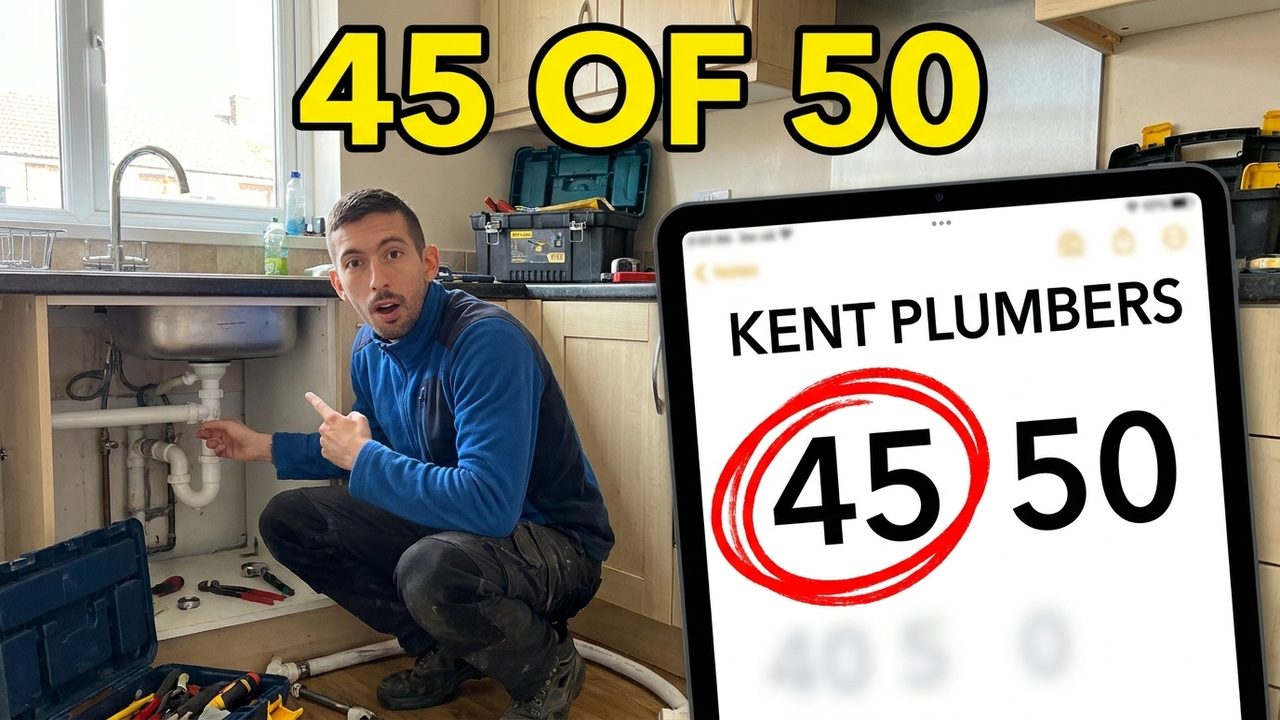
More than you'd think. When we went through 49 Kent plumbers earlier this year, 45 of them had no website at all. When we messaged local trades in Facebook groups this month, about half had none.
That cuts both ways. It means plenty of trades get by without one. It also means that in most towns, the trade with a decent website and good reviews stands out straight away.
What a website has to do in 2026
A website that's just a digital business card doesn't do much. To be worth paying for, it needs to do four jobs.
1. Show up for the job and the town
Your site should say clearly what you do and where you do it, in plain words customers actually search: "boiler repair in Medway", not "heating solutions". If your site never names the towns you cover, Google won't show you to people in them. More on that in getting found in Kent.
2. Prove you're real and good
Photos of your actual work, your reviews, your accreditations (Gas Safe, NICEIC, NAPIT, TrustMark or whatever applies), how long you've been going and a real face. Stock photos of a smiling man in a hard hat do nothing.
3. Make it easy to get in touch on a phone
Most people looking for a trade are on their phone. That means a button that rings you with one tap, plus a way to send the job with a photo and a postcode for people who'd rather not call, such as a job request form. Someone looking at 9pm should be able to send you the job right then.
4. Load fast and work properly
If it takes ages to load or the buttons are too small to tap, people go back and pick the next result.
What it should cost
Roughly three routes: build it yourself on a site builder, pay a freelancer a one off fee, or pay monthly for one that's built and looked after for you. We've broken the costs down in how much a trade website should cost in the UK.
Ours is the monthly route. Basic is £99 a month, or £799 for the year paid once, for the Smart Website with a job request form. There's no setup fee and no contract, it's live in 7 to 10 days and there's a 30 day money back guarantee.
What a website won't do on its own
To be fair about it, a website isn't magic. On its own it won't:
Make your phone ring overnight. It takes time for Google to trust a new site, especially in towns with lots of competition.
Replace your reputation. It shows people your reputation. If the work or the reviews aren't there, a website can't invent them.
Answer the phone for you. If people find you and then can't get hold of you, the website has done its bit and the job is still lost.
That last one is why we pair the website with things like a missed call text back and a job request form. Getting found is only half of it. The other half is not losing people once they've found you.
Website, Facebook and directories side by side
Your own website: yours to keep, shows up on Google for your trade and towns, takes job requests at any hour. Costs a monthly or one off fee.
Facebook page: free and good for people who already know you. Rarely shows up for "trade near me" searches, and you don't control who sees your posts.
Directories like Checkatrade: bring enquiries, but you pay for the listing and the leads, and the leads are often shared with other trades. When you stop paying, it stops.
Most busy trades end up using all three. The website is the one that ties the others together.
Questions trades ask
Do I need a website if I'm on Checkatrade?
You don't have to have one, but your Checkatrade profile isn't yours. If you leave, it goes. A website gives you somewhere to send people that you control, and it helps the customers who look you up after seeing your Checkatrade listing.
Is a Facebook page enough for a tradesman?
It's enough for people who already know you. It's rarely enough to get found by people searching Google for your trade in your town.
How quickly can a trade website start bringing in work?
It depends on your area, your reviews and how much competition there is. What a website does from day one is give people who've heard of you somewhere to check you out and get in touch.
What's the minimum a trade website should have?
Your trade and the towns you cover at the top, a tap to call button, a few photos of real jobs, your reviews and a simple way to send a job request.
If you're on the fence, book a quick call and we'll tell you straight whether a website is worth it for you. If it isn't, we'll say so.
