
Getting found by customers in Kent: a local guide for trades
Kent is big, and most trades don't cover all of it. You work a patch: the town, the villages around it and a few places you'll travel to for the right job. Your website should say that, because that's what customers search for.
Customers search by place
Nobody types "good plumber". They type "emergency plumber Maidstone" or "electrician Canterbury" into their phone. If your site doesn't mention the town, or only mentions it once on a contact page, it won't show up. A site built around your trade and the places you actually work gives Google what it needs to match you to those searches.
How Kent searches actually work
Kent is a mix of big towns, a lot of villages and areas people describe in different ways. That shapes what customers type:
Towns: Maidstone, Canterbury, Ashford, Tunbridge Wells, Sevenoaks, Folkestone, Dartford, Gravesend.
Medway: some people search "Medway", others search the towns inside it: Chatham, Rochester, Gillingham, Strood and Rainham.
Villages and smaller places: people in places like Aylesford, West Malling or Snodland often search the nearest big town, but some search the village name itself.
"Near me": Google uses the searcher's location, so your Google listing and its service areas matter a lot.
So a good Kent site names the main towns you cover and the villages around them, in plain words, in more than one place.
One page per area, not one page for everything
We build separate pages for each main area a trade covers. Each one talks about that town and the villages around it, the kind of jobs that come up there and how the system handles them. You can see ours for Maidstone, Canterbury, Ashford, Medway and Tunbridge Wells from the Kent page, and we build the same for your business.
A town page only helps if it's genuinely about that town. Swapping the name in the same paragraph doesn't fool Google or customers. Mention the villages you cover around it, the jobs you do most there and photos of work in that area.
What we found looking at Kent trades
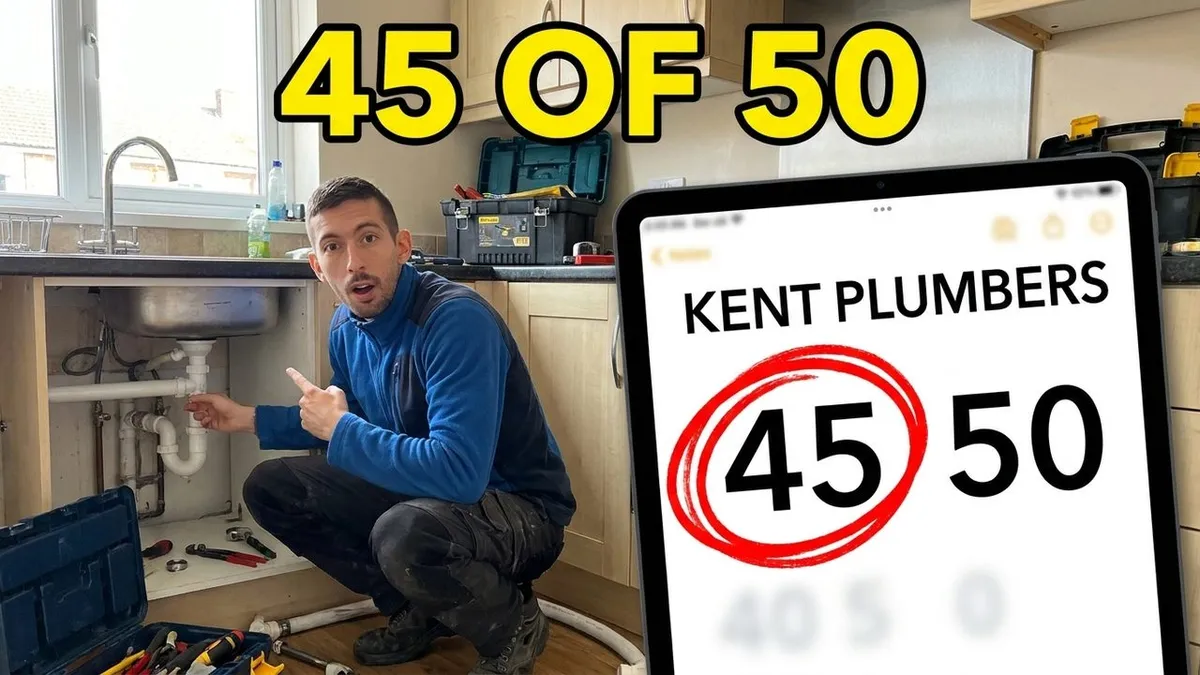
When we went through 49 Kent plumbers earlier this year, 45 of them had no website at all. Since then we've come across more of the same problems in Kent Facebook groups:
a plasterer with thirty years of experience and nothing on Google
a stonework company that works across Kent but whose website only mentions London
a heating engineer whose website email address is missing a letter, so emails bounce
Every one of those is fixable in an afternoon, and in most Kent towns the trade who fixes them stands out straight away.
Your Google listing matters as much as the site
For "near me" searches, the map results usually come first. Make sure your Google Business Profile lists the actual Kent towns you cover as service areas, has your hours in, has real photos and keeps getting reviews. There's a checklist in six things to check on your Google listing and a wider guide in local SEO for tradesmen.
Being local is only half of it
Being found is the first half. The customer still rings, and if you're on a job the second half is answering. The system covers both, which is why the Kent pages talk about the whole system rather than just the website.
Watch the whole system, from getting found to the booked job:
Listings that help Kent trades
Beyond Google, a handful of directories show up again and again in Kent searches. Being listed, with the same name, number and areas everywhere, helps Google trust your details:
Yell and FreeIndex, which both appear in local searches for trades.
Kent focused directories and business groups, such as Kent Small Business and your local chamber of commerce.
Your trade body's directory, such as Gas Safe, NICEIC, NAPIT or TrustMark, where customers check you.
Local Facebook groups, which aren't directories but are where a lot of Kent recommendations happen.
You don't need every directory going. Five or six accurate listings beat twenty with old details.
What a good Kent town page includes
If you build a page for a town you cover, here's what makes it useful rather than filler:
A headline with your trade and the town, such as "Electrician in Maidstone".
The villages around it you cover, by name.
The jobs you do most there, such as period property rewires in Tunbridge Wells or new build snagging around Ashford.
Photos of jobs in that area, with a line about each.
Reviews from customers in that town.
How quickly you can usually get there.
A call button and a job request form.
That's a page a customer in that town finds genuinely useful, which is exactly what Google is looking for.
Mistakes we see on Kent trade websites
Saying "all areas of Kent" instead of naming the towns you actually cover.
Mentioning only London, when you work across Kent.
One contact page with the town buried at the bottom.
Copy and paste town pages with nothing specific to each place.
A Google listing with no service areas set.
Old phone numbers on directories, which make Google less sure of your details.
Questions Kent trades ask
How do I show up in other Kent towns, not just mine?
Name them on your website, add them as service areas on your Google listing and get reviews from customers there that mention the town.
Should I have a page for every Kent village?
No. A page for each main town you cover, with the villages around it listed on that page, works far better than dozens of thin village pages.
Do I need a Kent address to be found in Kent?
You need a real address for your Google listing, but as a trade that goes to customers you can hide it and set service areas instead.
What to do next
Kent based, working with trades across the UK. Start on the Kent page, then book a quick call or sign up on the pricing page.
