Websites for plumbers: what to put on yours so it wins the job
When we went through 49 Kent plumbers earlier this year, 45 of them had no website. Plenty of them are busy anyway. But when someone has water coming through the ceiling, they don't wait for a recommendation. They search, and they ring whoever looks right first.
This guide covers what a plumber's website needs to be that first call, for one van plumbers and small teams across the UK.
Two kinds of customer, two kinds of search
Plumbing work splits into two very different customers, and your website needs to look after both.
The emergency customer. A burst pipe, a leak, no hot water, a blocked toilet. They're stressed, they're on their phone and they want someone today. They search things like "emergency plumber near me", "leak repair" and "no hot water".
The planned customer. A new bathroom, a boiler swap, moving a radiator, an outside tap. They have time to compare. They search things like "bathroom fitter in Maidstone", "boiler replacement cost" and "plumber for kitchen sink install". They read reviews, look at photos and often contact two or three of you.
The emergency customer needs a big call button and a reply within minutes. The planned customer needs photos, reviews and an easy way to send the job with details.
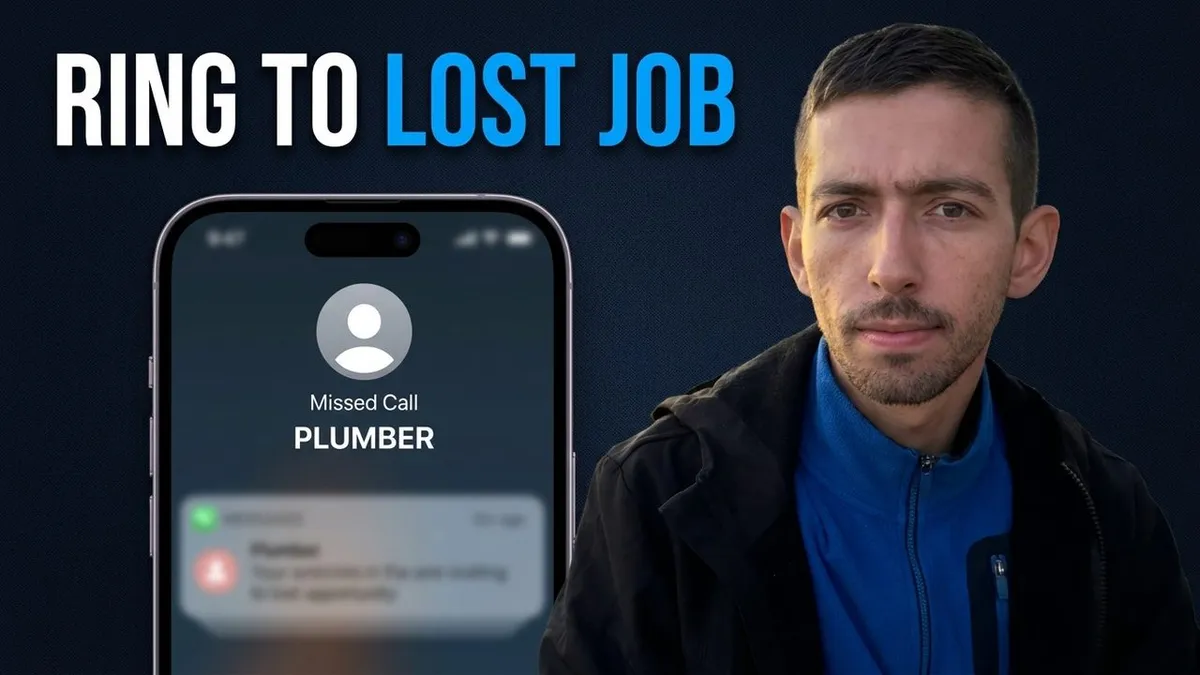
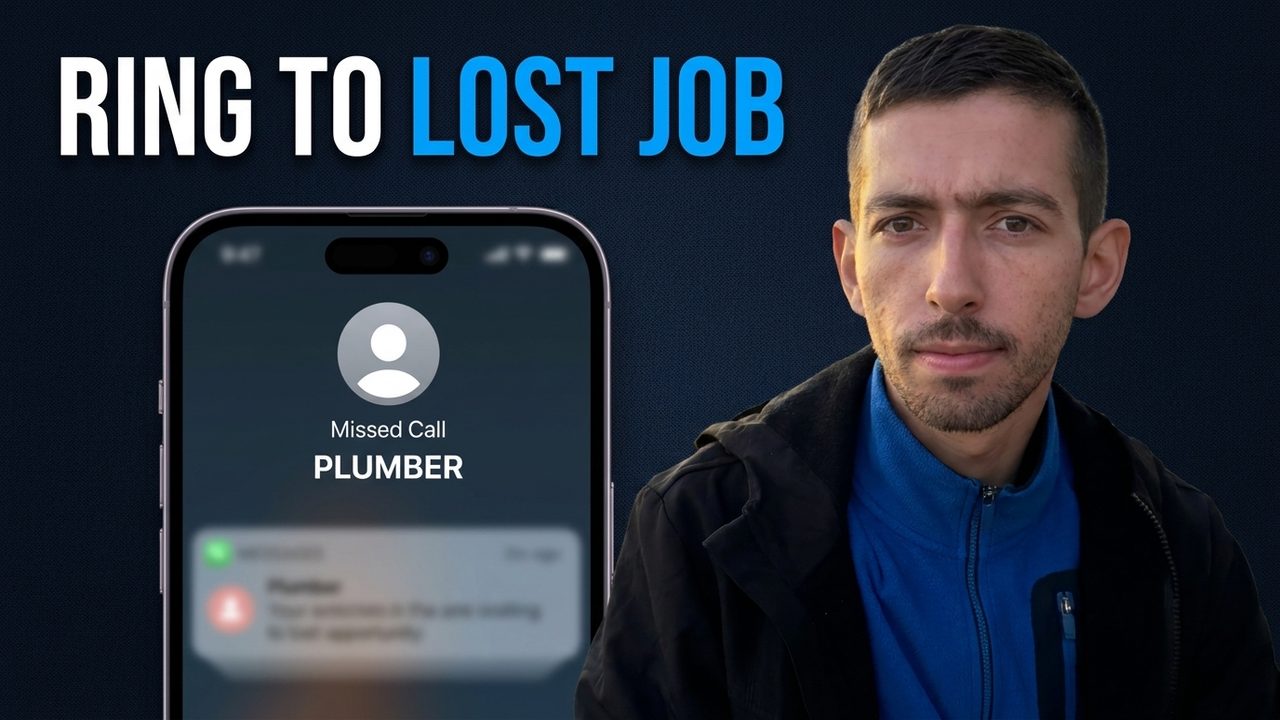
Watch it: we followed one plumber's missed call from the ring to the lost job.
What to show near the top
Your trade and your towns. "Plumber in Medway and Maidstone", not "Welcome".
A tap to call button and a way to send a job request for people who'd rather not call.
Your Gas Safe registration, if you do any gas work. By law, anyone working on gas appliances must be on the Gas Safe Register, and customers can check you on the register's website. Put your number on the site.
WaterSafe, if you're an approved plumber through one of the schemes it covers.
Your Google rating and how many reviews.
Say whether you do emergencies, and when
Be clear about this. If you don't do emergencies, say so, and you'll save yourself calls you can't take. If you do, say your hours and whether there's a call out charge.
The reality of emergency plumbing is that you'll be on a job when the next one rings. A missed call text back means the caller gets a text from you within seconds instead of a ring out, and you can reply properly when your hands are free. There's more on the options in answering service for tradesmen: every option compared.
Pages a plumber's website needs
Home: your trade, towns, call button, accreditation and reviews on the first screen.
Emergency plumbing: what you cover, your hours and what happens when they ring.
Boilers and heating: if you're Gas Safe registered.
Bathrooms and kitchens: with photos of finished jobs.
Drains: if you do them, because people search for it separately.
Areas: every town and village you cover, by name.
Contact: phone, a job request form that takes photos and your hours.
You don't need all of these as separate pages on day one. One well written page per main job is better than ten thin ones.
Photos sell plumbing jobs
A tidy finished bathroom, a neat boiler install with the pipework clipped straight, a before and after of a leak repair. These do more for a planned customer than anything you write. Take them in daylight, from the same spot before and after, with the tools out of shot. There are more tips in how to photograph your work so it wins the next job.
Mistakes we see on plumbing websites
No website at all, just a Facebook page. Facebook pages rarely show up when someone searches "plumber near me".
An old site. We came across a plumber whose site hadn't been touched since 2023. To a customer, that raises the question "are they still trading?"
No towns named, so the site doesn't show up for searches in the places they cover.
Contact details hidden at the bottom of the page.
Stock photos of someone else's bathroom.
What about prices?
You don't need a full price list, but people do want some idea. A call out fee, a "from" price for common jobs or a typical range for a bathroom helps the planned customer decide whether to get in touch. It also cuts down on the "how much for a bathroom?" messages with no details.
What a good first screen looks like for a plumber
Here's the kind of thing that works on the first screen of a plumber's website, on a phone:
Headline: "Plumber in Maidstone and Medway"
One line underneath: "Leaks, boilers, bathrooms and blocked drains. Gas Safe registered."
Two buttons: "Call now" and "Send a job with a photo"
One trust line: your Google rating and number of reviews
That's it. Everything else can go further down the page. Someone with a leak sees in a second that you're a plumber, you cover their town and they can ring you with one tap.
Reviews do the heavy lifting
For plumbing, reviews often matter more than anything you write about yourself. Show your Google reviews on your website, and when you ask customers for new ones, ask them to mention the job and the town. "Fixed a leak under our sink in Rochester, same day" is worth far more than "great service". There's a full guide in how to get more Google reviews without asking face to face.
Questions plumbers ask
Do plumbers need a website?
If you're booked solid through word of mouth, maybe not. If you want planned work like bathrooms and boilers, or emergency calls from people who don't know you yet, a website with reviews and a call button makes a big difference.
What should a plumber put on their website?
Your trade and towns, the jobs you do in plain words, your Gas Safe number if you do gas work, real photos, your reviews and an easy way to call or send a job with photos.
Should I show my Gas Safe number?
Yes, if you do gas work. Customers can check it on the Gas Safe Register, and showing it up front builds trust fast.
How much does a plumbing website cost?
It ranges from a do it yourself builder to a one off design fee to a monthly service. We broke it down in how much a trade website should cost in the UK.
See what we set up for plumbers. Basic is £99 a month or £799 for the year paid once, with no setup fee and no contract, and it's live in 7 to 10 days.
