Answering service for tradesmen: every option compared, from voicemail to AI
You're on a roof, under a sink or halfway through rewiring a kitchen. The phone goes in your pocket and you can't get to it. Every trade knows that moment, and most have tried something to fix it. Voicemail. A partner taking calls. A paid answering service. More recently, texts and AI.
This guide goes through every option a UK trade has for answering calls when you can't, what each one actually does for the customer on the other end and where each one falls down. It's written for one van and small team trades: plumbers, electricians, roofers, builders, heating engineers and everyone else who works with their hands full.
Why the missed call matters more than it used to
Customers don't wait the way they used to. Someone with a leak or a dead boiler rings two or three numbers from Google, one after another. Whoever answers, or replies first, usually gets the job.
There's research behind that. A study by MIT and InsideSales, published in Harvard Business Review in 2011, found that replying to an enquiry within five minutes made it 21 times more likely to turn into a real lead than replying after thirty minutes. That study looked at sales enquiries in general, but anyone who has rung three plumbers in a row knows it holds for trades too.
So the question isn't whether you miss calls. Everyone does when they're working. The question is what the customer gets when you do.
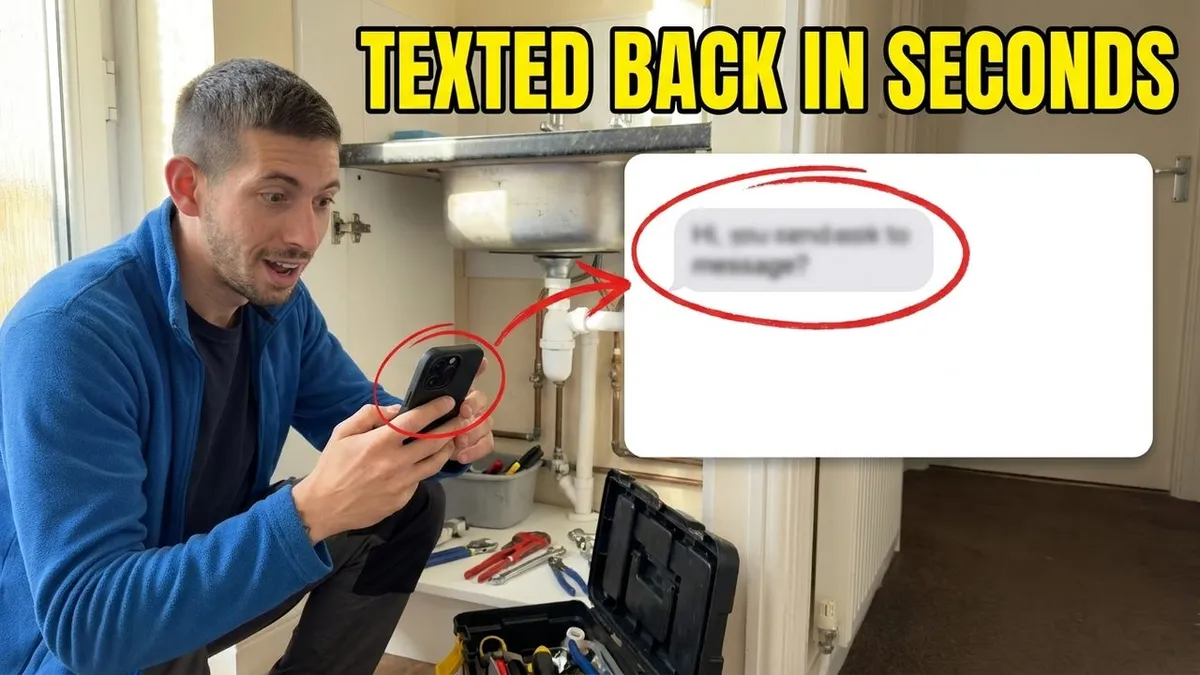
Watch it: a customer rings, the trade can't answer, and seconds later the customer has a text.
Option 1: voicemail
What the customer gets: your greeting and a beep.
The good: it's free and it's already on your phone.
The problem: most people don't leave one. They hang up and ring the next number. The few who do leave a message then wait, and you might not hear it until the evening. By then plenty of them have booked someone else.
Who it suits: trades who are booked solid weeks ahead and genuinely don't need new work.
If you keep voicemail, make the greeting short, say you're on a job and ask them to text the same number. A text is far easier to answer between jobs than a voicemail is to listen to.
Option 2: a call answering service
A person in a call centre picks up in your business name, takes the caller's name, number and a short message, then sends it to you.
The good: the customer speaks to a human, which is reassuring, especially in an emergency.
The problem: the person answering can't tell the customer when you can come, what it'll cost or whether you do that kind of job, so the customer is still waiting on you. Most plans charge per call or per minute, and that includes the sales calls and the time wasters. And you still have to ring every caller back yourself.
Who it suits: trades with a lot of emergency calls who want a human voice at 2am.
Option 3: a virtual receptionist or AI voice agent
A step up from a message taker. Some are people working from your script, some are AI voices. The better ones can take job details, answer common questions and book into a calendar.
The good: they handle more than a message, and an AI voice can take every call at once, day and night.
The problem: the setup makes or breaks it. An AI voice that mishears a postcode or goes round in circles puts people off quickly, and some callers hang up the moment they realise it isn't a person. The UK AI receptionists we've looked at sit at roughly £45 to £99 a month, and none of them come with a website or anything beyond the phone.
Who it suits: busier trades with a steady flow of calls who are willing to spend time getting the script right.
Option 4: missed call text back
When you can't answer, the caller gets a text from your business within seconds. Something like: "Sorry I missed you, I'm on a job. What do you need? I'll get back to you shortly."
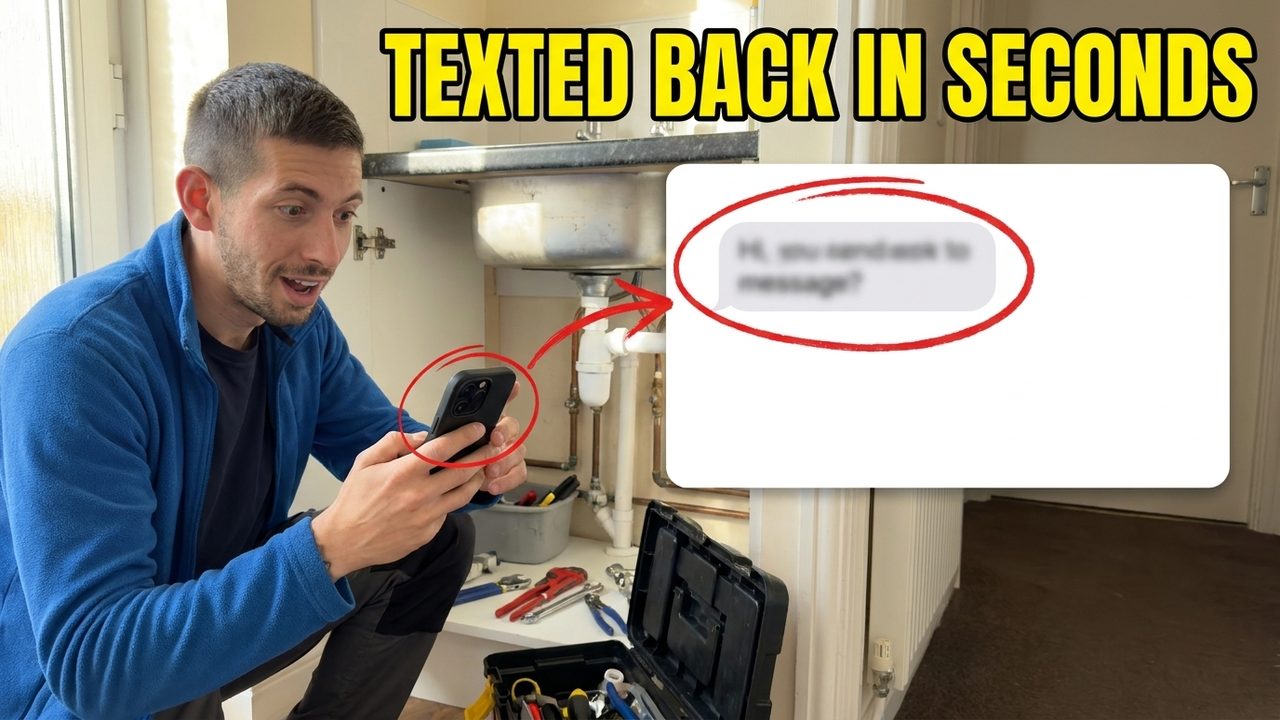
The good: the customer knows straight away that you're real and that you've seen the call. They can reply with the job while it's fresh in their mind, and a text conversation is easy to pick up between jobs. There are no per call charges and nobody is pretending to be you.
The problem: it doesn't answer the phone. Some customers, often older ones, would rather talk. For them you still ring back, and quickly.
Who it suits: most one van and small team trades. It covers the exact moment that loses the job, the ring out, for very little effort.
You can read more in missed call text back for trades: what it is and why it works.
Option 5: AI chat that replies and books
This sits behind the text back and on your website. When the customer replies, an assistant set up with your services, your areas and your rules asks the right questions, answers the common ones and offers a time to book in. You see every message and can take over whenever you like.
The good: the conversation keeps moving while you're working. The customer gets an answer at 9pm on a Sunday. You get the job details in writing instead of a rushed voicemail.
The problem: it has to be set up with your real prices, areas and limits, or it will say things you wouldn't. It should always hand anything unusual straight to you.
Who it suits: trades who get a lot of evening and weekend enquiries and want them booked, not just logged.
Watch it: the AI chat replying to a customer and booking the job.
The options side by side
Voicemail: free, most callers don't leave one, you ring back later.
Call answering service: a human voice that takes a message, you still ring back, usually charged per call or per minute.
Virtual receptionist or AI voice: can answer questions and book, needs careful setup, some callers hang up on an AI.
Missed call text back: an instant reply from your business, the customer texts the details, no per call cost.
AI chat that books: keeps the conversation going and books the job, needs your real details set up first.
Roofers, heating engineers and emergency trades
Some trades miss more calls than others simply because of where the work happens. Roofers are up a ladder with both hands busy. Heating engineers are in a cupboard with a boiler in pieces. Emergency electricians and locksmiths get calls late at night while they're already out on another job.
For these trades the first reply matters even more, because the customer is stressed and in a hurry. A text that says "On a job right now, what's happened?" buys you time without losing them. We've written about locksmiths and the 11pm lockout, and there's a page on what we set up for roofers and heating engineers.
What we'd set up for a typical one van trade
For most trades a combination works better than a full answering service, and costs less.
Missed call text back, so nobody ever just hears a ring out.
A job request form on your website, so people who would rather not call can send the job with photos and a postcode. More on that in why your website needs a job request form.
One inbox, so texts, Facebook messages, WhatsApps and form requests land in one list on your phone. See five inboxes and the job was in the fifth.
AI chat for out of hours, if you get enough evening and weekend enquiries to make it worth it.
A voicemail greeting that says "text this number", for the few who still leave a message.
That's what our Full System does: £199 a month, no setup fee and no contract. If you only want the website and the job request form, Basic is £99 a month. Both come with a 30 day money back guarantee.
Questions trades ask
Is an answering service worth it for a tradesman?
It can be if you get a lot of emergency calls and want a human voice on the line. For most one van trades, a missed call text back covers the moment that loses the job for far less, and the customer can send the details straight away.
Will customers mind getting a text instead of a person?
Most people would much rather get a quick text than a ring out or a voicemail. It tells them you exist and you've seen the call. Anyone who wants to talk can say so, and you ring them back.
What does an AI receptionist cost in the UK?
The ones we've compared sit between about £45 and £99 a month, and that usually covers the phone side only. Check what happens to the caller when the AI gets stuck, and whether you can listen back to calls.
What's the cheapest way to stop losing jobs to missed calls?
Change your voicemail greeting today to ask callers to text you, then reply to every missed call as soon as you can. When you want it to happen without you thinking about it, a missed call text back does the same thing automatically.
If you want to see it working on a real job first, book a quick call and we'll show you.
