How to Automate Customer Enquiries: A Guide for UK Small Businesses
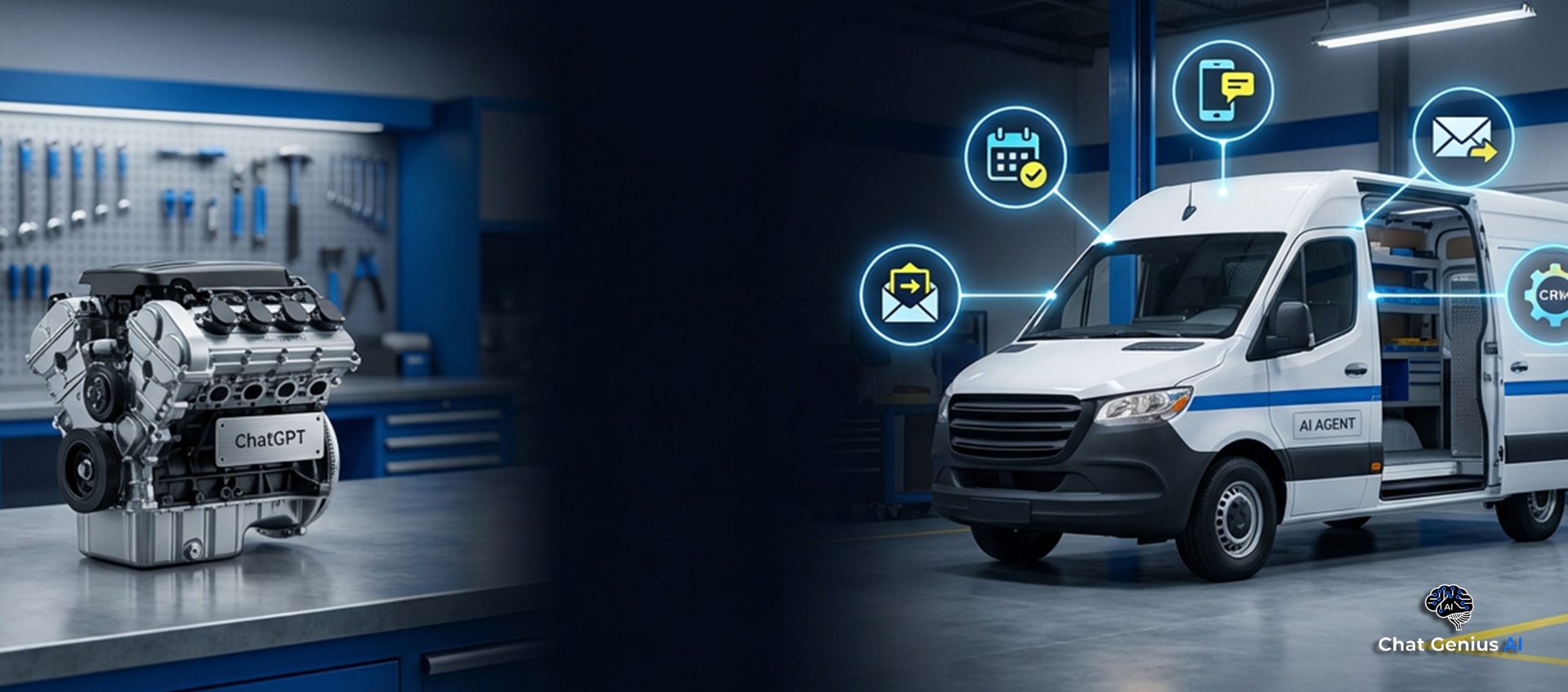
FIG 01: AI Systems
The Problem Every UK Service Business Knows Too Well
You finish a long day on site. You check your phone. Three missed calls, two voicemails, a Facebook message and four emails. All from potential customers who wanted a quote, a callback or a booking.
By the time you reply the next morning, half of them have already gone with someone else.
This is not a time management problem. It is a volume problem. UK service businesses, from electricians and plumbers to kitchen fitters and landscapers, receive more enquiries than one person can handle in real time. The businesses that win are the ones that respond first. Research consistently shows that the first company to reply gets the job in 78% of cases.
So the question is not whether you should respond faster. The question is how.
What "Automating Enquiries" Actually Means
When most people hear "automate customer enquiries," they picture a clunky chatbot that says "Please select from the following options" and then sends you round in circles.
That is not what we are talking about.
Modern enquiry automation uses artificial intelligence that actually understands what your customer is asking. It reads the message, identifies the intent, pulls up the right information and takes action. That might mean answering a pricing question, checking your availability, booking an appointment or collecting the details you need to send a quote.
Think of it less like a chatbot and more like a knowledgeable receptionist who works 24 hours a day, 7 days a week, responds in 2 seconds and never calls in sick.
The AI sits on your website (or connects to your Facebook, Instagram and SMS). When a customer sends a message, the AI handles the conversation naturally. If it can resolve the enquiry, it does. If it cannot, it collects all the details and passes them to you with a full summary so you can follow up personally.
Which Enquiries Can Be Automated
Not every customer interaction needs you personally. Here are the types of enquiries that AI handles well.
Pricing questions. "How much do you charge for a boiler service?" or "What is the cost of a fitted kitchen?" The AI provides your standard pricing, price ranges or guides the customer toward a quote request.
Availability and scheduling. "Are you free next Tuesday?" or "Can you come out this week?" The AI checks your calendar and books the appointment directly.
Service information. "Do you cover the Birmingham area?" or "Do you install combi boilers?" Straightforward factual answers pulled from your business information.
Quote requests. The AI collects the customer's name, address, job description, preferred dates and contact details, then sends you a complete brief so you can price the job without a back and forth.
FAQs. Opening hours, payment methods, guarantee terms, areas covered. All the questions you answer ten times a week.
Which Enquiries Still Need You
Automation is not about removing the human touch. It is about using your time where it matters most.
Complaints and disputes. These need empathy, judgement and a personal response. The AI can acknowledge the complaint, log the details and flag it for your immediate attention, but you should handle the resolution.
Complex custom work. A customer who wants a bespoke extension with specific architectural requirements needs a conversation with you. The AI collects initial details and books a consultation, but the design discussion stays human.
High value negotiations. When a commercial client wants to discuss a large contract, that relationship needs you. The AI qualifies the lead and gets them on your calendar.
The pattern is simple: if the enquiry follows a predictable path, automate it. If it requires expertise, creativity or emotional intelligence, keep it human.
How It Works on a Trades Business Website: Step by Step
Here is exactly what happens when a potential customer visits your website.
Step 1: The widget appears. A small chat icon sits in the bottom right corner of your site. It is branded to match your business colours and logo.
Step 2: The customer asks a question. They type something like "Hi, I need a new consumer unit fitted. How much would that be and when can you come out?"
Step 3: The AI responds in 2 seconds. It greets the customer, provides your pricing information for consumer unit replacements and asks what dates work for them.
Step 4: The customer picks a time. The AI shows your available slots. The customer selects one.
Step 5: The booking is confirmed. The appointment is added to your calendar. The customer receives a confirmation message with the date, time and your contact details. You receive a notification with all the job details.
Step 6: The AI follows up. If the customer disappears mid conversation, the AI sends a polite follow up. If they asked for a quote but did not book, the AI checks back in after 24 hours.
The entire process takes under two minutes for the customer and zero minutes from you.
Before and After: A Kitchen Fitter in Manchester
Before automation. Dave runs a kitchen fitting business. He gets around 40 enquiries a week across his website, Facebook page and phone. He replies to most of them within a few hours, but evenings and weekends are a dead zone. He estimates he loses 10 to 15 leads a month to slow response times. At an average job value of £6,000, that is potentially £60,000 to £90,000 in lost revenue per year.
After automation. Dave installs an AI enquiry system on his website and connects it to his Facebook page. The AI now handles first responses instantly, 24/7. It answers pricing questions, collects quote details and books consultations directly into his diary. Dave still handles every consultation personally, but the AI fills his calendar instead of leaving it to chance.
Within 60 days, Dave books 7 out of every 10 enquiries into consultations. His evenings are free because the AI handles after hours messages. His conversion rate climbs because customers get instant attention instead of waiting until the next morning.
What It Costs vs What It Saves
Let us look at the numbers honestly.
An AI chat widget that handles enquiries on your website costs £99 per month. A full AI agent that connects across multiple channels, books appointments, follows up with leads and integrates with your business systems costs £389 per month.
Now consider the alternative. A part time receptionist costs £800 to £1,200 per month. A virtual assistant costs £500 to £900. And neither of them works at 2am on a Saturday when a homeowner is researching kitchen fitters for a Monday morning call.
More importantly, consider what you are already losing. If slow response times cost you just two jobs a month (and for most trades businesses, it is more than that), the maths speaks for itself. Two lost kitchen fitting jobs at £6,000 each is £12,000 in missed revenue. Two lost electrical jobs at £1,500 each is £3,000. Even at the lower end, a £99 or £389 monthly investment pays for itself many times over.
There are no setup fees and every plan comes with a 7-day money-back guarantee, so you can test it with zero risk.
How to Get Started
The fastest way to see this in action is to try a personalised demo. You fill in your business details and the system creates a working demo tailored to your company, so you can see exactly how it handles your specific type of enquiries.
Try a free personalised demo here
The demo takes about 60 seconds to set up. You will see the AI respond to the kind of questions your customers actually ask, using your business name, services and pricing.
If you like what you see, deployment takes 5 to 7 days. We build the system, train it on your business information, connect it to your website and channels, and handle everything for you.
No technical skills required. No software to install. No contracts beyond the monthly subscription.
Stop Losing Leads to Slow Response Times
Every enquiry that goes unanswered for more than a few minutes is a customer choosing your competitor instead. Automating your customer enquiries is not about replacing yourself. It is about making sure no opportunity slips through the cracks while you are on a job, driving between sites or spending the evening with your family.
The technology exists, it is affordable and it works. UK service businesses are already using it to book more jobs, recover lost revenue and get their evenings back.
Book Your Free Success Session or try the demo and see the difference for yourself.
Ready to Transform Your Business?
Book a free Success Session and let us show you how we can implement these strategies for you.