
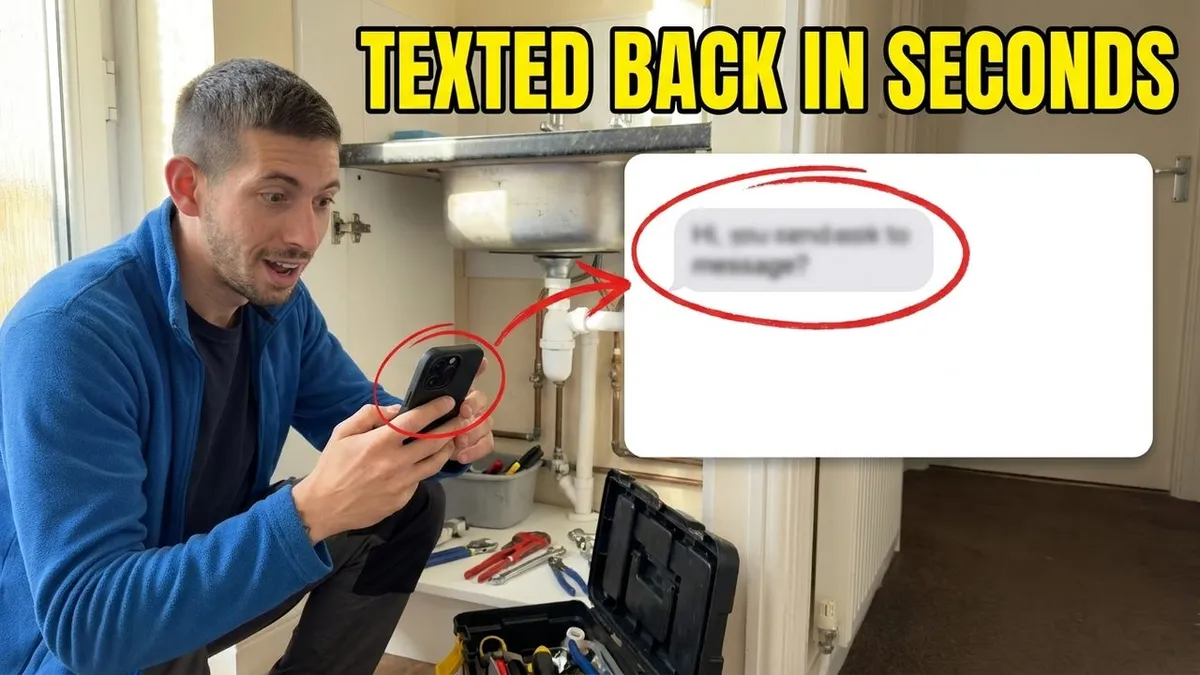
Answering service or text back? What per minute billing really costs
You get a quote for a call answering service. It looks fine: a monthly fee, then a small charge per minute or per call. Three months in, the bill is double what you expected and you're not sure why.
On review sites, owners describe exactly that. A first month's bill about £800 over what they expected. Calls billed by the minute when they thought it was per call. A call of one minute and one second billed as two minutes. Invoices that included sales calls and wrong numbers.
None of that means you should never use an answering service. Plenty of owners love having a real, friendly voice on the line. But you need to know how the billing works before you sign.
We've already compared every option, from voicemail to AI, in answering service for tradesmen: every option compared. This post is just about the money: how per minute and per call billing work, what to check in the terms and a worked monthly sum you can redo with your own numbers.
Per call or per minute: how each one works
Most answering services charge one of two ways, usually on top of a monthly fee.
Per call: you pay a set amount for each call they answer, however long it lasts. Easier to predict. On one small business forum, a member gives a rule of thumb of £1 to £2 per handled call.
Per minute: you pay for the time the receptionist spends on each call. Short calls are cheap and long ones aren't. Harder to predict, because you don't control how long the caller talks.
Some plans give you a bundle of calls or minutes each month. Go over it and you pay overage, often at a higher rate. Owners on review sites describe overage charges turning up with no warning.
Neither way is wrong. The trouble starts when you don't know which one you're on or how the minutes are counted.
The small print that changes the bill
Ask these before you sign and get the answers in writing.
Per call or per minute? Can they switch you from one to the other during the contract? Some owners report being moved without agreeing to it.
How are minutes counted? By the second, or rounded up to the next full minute? On short calls, rounding up can nearly double the bill.
Is there a minimum charge per call? Some plans charge a minimum even for a ten second call.
What counts as a call? Sales calls, wrong numbers, silent calls and hang ups. Do you pay for those?
Are out of hours calls charged more? Evenings, weekends and bank holidays often cost extra.
What's in the monthly fee? Is there a setup fee? What does the bundle cover?
What's the minimum term and the notice period? Owners mention minimum terms of a few months and notice periods of up to 90 days.
Whose phone number is it? If customers ring a number the service gave you, it may not come with you when you leave. Owners report losing the number. It's safer to keep your own number and divert it.
How fast do they answer? Ask for the target and what happens when they miss it. One owner tracked their calls for 12 weeks and found only 85% were answered, against a much higher promise.
How do messages reach you? Text, email or an app? How quickly?
This isn't legal advice, but one thing is worth knowing: business buyers usually don't get the 14 day cooling off period that consumers get. Read the terms before you sign, not after. Our post on reading a contract before you sign has more.
A worked monthly sum
The rates below are made up round numbers to show the maths. Use the rates from your own quote.
Say you get 60 calls a month that you can't answer yourself. The service charges a £30 monthly fee plus 90p a minute, rounded up to the next full minute.
The average call actually lasts 2 minutes 10 seconds.
Rounded up, each one is billed as 3 minutes.
60 calls at 3 minutes each is 180 billed minutes.
180 minutes at 90p is £162.
Add the £30 fee and you're at £192 a month.
If the minutes were counted by the second, you'd pay for about 130 minutes. That's £117, plus the fee, so £147. The rounding alone costs £45 a month, or £540 a year.
Now say 15 of those 60 calls are sales calls, wrong numbers or people who hang up. At 3 billed minutes each, that's 45 minutes, or £40.50 a month, on calls that were never going to be jobs.
Over a year the example comes to £2,304. And after all that, you still have to ring every real customer back yourself. The receptionist took a message. They couldn't tell the customer when you can come or what it'll cost.
Watch it: how much would you pay to never miss a call? We did the maths.
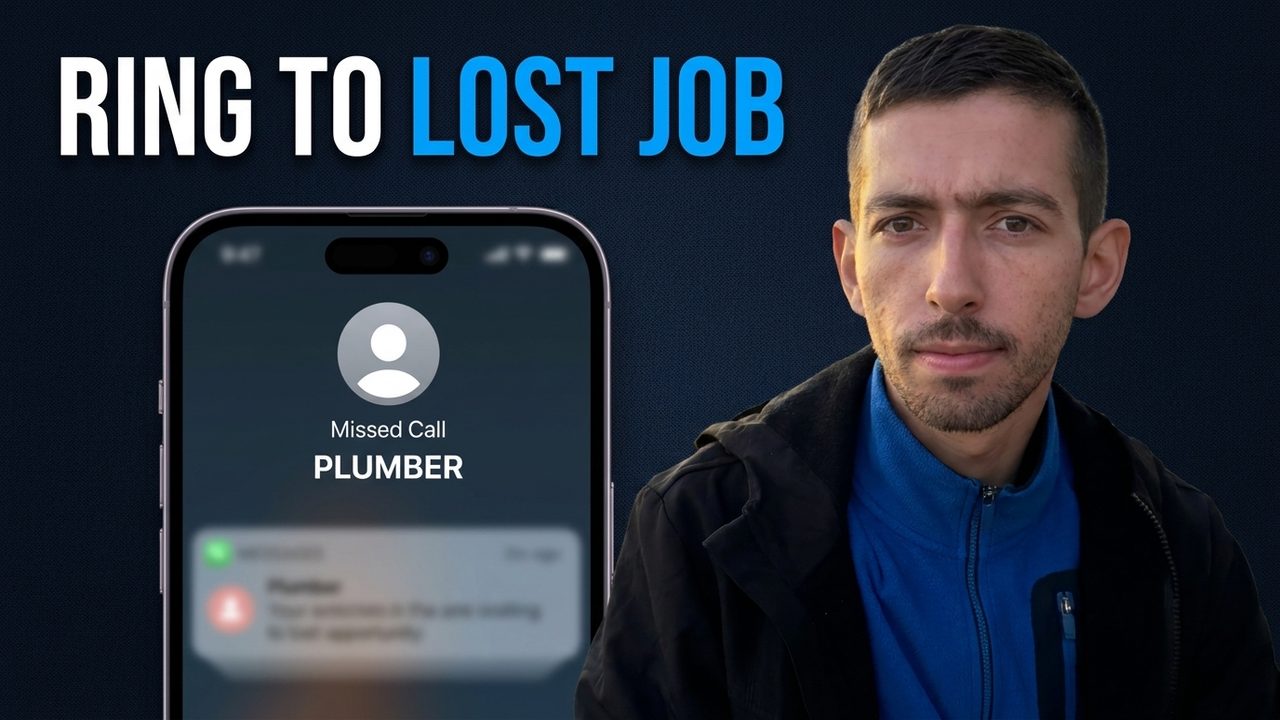
What a missed call text back costs instead
A missed call text back works differently. When you can't answer, the caller gets a text from your number within seconds: "Sorry I missed you, I'm on a job. What do you need?" They reply with the job while it's fresh and you pick it up between jobs.
There's no per minute or per call charge. With us it's part of the Full System at £199 a month or £1,600 a year paid once. The price never goes up for as long as you stay. That also covers your website, one inbox, AI chat that books, reminders and review requests. It isn't on the £99 Basic plan, which is the website and job request form only. And when you need something changed, you deal with Charlie directly, not a call centre.

It isn't a like for like swap, though. More on that below. If you want the longer explanation, read missed call text back for trades.
Watch it: a missed call turning into a text conversation in seconds.
Be fair about what a person on the phone gives you
A text back doesn't answer the phone. Some customers, often older ones, want to talk to someone. In an emergency, a calm human voice at 2am is worth a lot. It's the thing owners praise most about answering services.
So here's a rough rule:
Lots of emergency calls, out of hours, from people who want to talk: an answering service may earn its keep. If your calls run long, per call billing is usually easier to live with.
Most calls in working hours while you're on a job: a text back covers the moment that loses the job, without a per minute bill.
Some of both: text back for every missed call, with an answering service just for nights.
Whichever you pick, speed matters. Replying within five minutes made an enquiry 21 times more likely to become a real lead than replying after thirty minutes (MIT and InsideSales, published in Harvard Business Review, 2011). Customers ringing round don't wait.
Questions trades ask
How much does a call answering service cost per call in the UK?
It varies a lot between providers and plans. One forum rule of thumb puts it at £1 to £2 per handled call, usually on top of a monthly fee. Ask for a sample bill based on your own call numbers before you sign.
Is per minute or per call billing better?
Per call is easier to predict and suits longer calls. Per minute can work out cheaper if your calls are short, but check whether minutes are rounded up, because that adds up fast over a month.
Do I pay for sales calls and wrong numbers?
Often, yes, unless the plan says otherwise. Ask exactly what counts as a billable call before you sign.
Can I keep my number if I leave an answering service?
Keep your own number and divert calls to the service. Then nothing changes for your customers if you leave. If the service gives you a new number to publish, ask in writing whether you can take it with you.
If you want to see a missed call turn into a text conversation on a real trade number, book a quick call and we'll show you.
