
The customer never answered: what to do when a lead goes quiet
You rang back. You texted. Maybe you went round, measured up and sent a proper quote. Then nothing. No reply, no "no thanks", just silence.
Every trade gets this. On lead sites it's one of the biggest complaints. Trades describe paying for a contact who never picks up, then sending quotes that vanish.
Quiet doesn't always mean no. People get busy. They lose your message among twenty others. They feel awkward saying they went with someone else. A short, polite follow up can get some of them talking again. The trick is doing it every time, without feeling like you're begging.
This post covers both kinds of quiet: the lead who never answered in the first place and the customer who went silent after your quote.
Why leads go quiet
Someone else got there first. If they rang three trades, the first to reply often wins. A study by MIT and InsideSales, published in Harvard Business Review in 2011, found that replying within five minutes made an enquiry 21 times more likely to become a real lead than replying after thirty minutes.
They're comparing. They've got three quotes and haven't decided yet.
The price surprised them. They're not saying no. They're working out if they can afford it.
Life got in the way. Kids, work, a busy week. The leak got a bucket under it and dropped down the list.
They didn't see your message. It went to voicemail, a spam folder or an app they never open.
It was never real. On lead sites, trades describe fake and repeated job posts. Some quiet leads were never going to answer.
You can fix most of these. Not the last one.
Part 1: the lead who never answered
Most of the fix is speed, plus making it easy to reply.
Reply within five minutes if you can. Even "On a job, back to you by 5" counts.
Text as well as call. A missed call from an unknown number gets ignored. A text with your name and trade gets read.
Say who you are and why you're in touch. "Hi, it's Dave the plumber. You asked about a leaking radiator valve."
Ask one easy question. "Is it still leaking?" is far easier to answer than "Let me know if you'd like to proceed."
Try twice more, then stop. Once later that day, once two days later. After that, leave it.
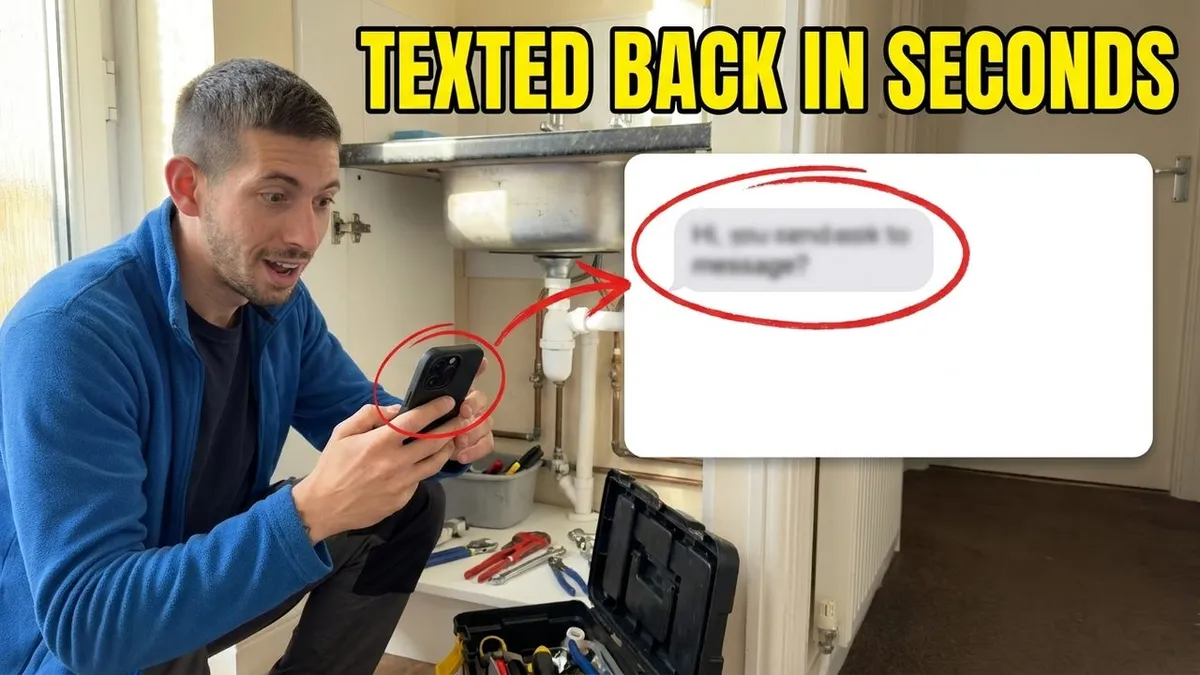
If you can't reply in five minutes because you're working, that's the gap a missed call text back covers. The customer gets a text from your number within seconds, so you're the one who replied first.
Watch it: a missed call turning into a text conversation in seconds.
Part 2: the customer who went quiet after your quote
The quote is where most trades give up too early. They send it, hear nothing and assume it's a no. A simple follow up plan fixes that.
Before you send the quote
Send it in writing, the same day if you can. A quote that turns up a week later is up against two that arrived on the day.
Make it easy to read on a phone. What you'll do, the price, when you can start and how to say yes.
Say when you'll follow up. "I'll drop you a text Thursday in case you've any questions." Then they expect it, so it doesn't feel pushy.
If you're still writing quotes at the kitchen table at 9pm, read send the quote from the van.
The follow up plan
Here's a simple one. Copy it into your phone notes and change the names.
Day 2: "Hi Sarah, just checking the quote came through OK. Any questions, give me a shout."
Day 5: "Hi Sarah, I've got a gap on the 14th if you wanted to get the bathroom booked in. Happy to hold it till Friday."
Day 12: "Hi Sarah, no worries if you've gone with someone else. Just let me know so I can free up the date."
Day 30 to 60: "Hi Sarah, are you still after the bathroom doing? The quote still stands if so."
The third message often gets a reply, because it gives people an easy way to say no. A no is useful too. You stop chasing and you can ask what swung it.
What not to do
Don't ring every day. On review sites, homeowners say being chased by trades who didn't get the job is one of the things they like least.
Don't drop the price in your second message. It tells them the first price wasn't real.
Don't send a long message about how busy you are. Keep it short and friendly.
The worked example: what quiet quotes cost
Do this with your own numbers. Say you send eight quotes a month and win three. That's five quiet or lost quotes a month, sixty a year.
Say your average job is £600. If a steady follow up turned one in ten of those sixty into a yes, that's six jobs. That's £3,600 of work where you'd already done the hard part. You've measured up, priced it and written the quote. The follow up is four texts.
Old quotes are worth a message too
Every quote that went quiet last year is still sitting in your phone. So are your past customers. A short, honest message to that list, asking if there's anything they need doing before winter, is some of the easiest work there is to win back.
That's what a database reactivation campaign does, done properly and all in one go. Our Full System comes with one free campaign, worth £500. More in database reactivation for trades.
Watch it: your easiest jobs this year are already in your phone.
How the Full System helps
You can do everything in this post by hand. The Full System stops the first reply slipping through while you're on the tools:
Missed call text back, so nobody hears a ring out and rings the next number.
One inbox, so texts, Facebook messages and form requests land in one place. See one inbox for trades.
AI chat that books, so evening enquiries get an answer and a time, not silence until morning.
Automatic reminders, so once a job is booked the customer gets a reminder before you arrive.
The Full System is £199 a month or £1,600 a year. No setup fee, no contract and the price never goes up while you stay. Details are on our pricing page.
Checklist for every quiet lead
Did I reply within five minutes, or did a text go out for me?
Did I text as well as call?
Did I send the quote in writing, the same day?
Did I say when I'd follow up?
Have I sent the day 2, day 5 and day 12 messages?
Is the quote on my list for a message in a month or two?
Questions trades ask
Customer not responding after a quote: should I chase?
Yes, politely and on a plan. Two or three short texts over a couple of weeks is normal and most people don't mind. Daily calls are too much.
How long should I wait before following up a quote?
Two days is about right for the first check. It's soon enough that they still remember you but not so soon that you look pushy.
What do I say when a customer goes quiet?
Keep it short and give them an easy reply. "Just checking the quote came through OK" works first. "No worries if you've gone with someone else, just let me know" works later.
Do I still pay for a lead if the customer never answers?
On most lead sites, yes. You pay for the contact, not the job. Some have a short window to dispute a bad lead, so check the rules and act quickly. We've done the sums in work out your real cost per job.

You deal with Charlie directly, not a call centre. If you'd like the first reply to go out while you're still up the ladder, book a quick call and he'll show you how it works.
