
One job, five trades, cheapest wins: how to stop racing to the bottom
Your phone pings. A new lead: kitchen tap replacement, three miles away. You pay for it, ring straight away and get voicemail. When the customer finally rings back, they say: "I've had four of you call already. Who's cheapest?"
That's a shared lead. On review sites, trades describe it again and again: one job charged to several trades while only one can win. The customer quickly learns to play you off against each other.
Homeowners don't love it either. Some say they were flooded with calls within minutes of posting a job. Others say the trades who lost kept ringing afterwards.
This post is about getting out of that race. Not by being cheapest, but by changing where your jobs come from and how you win the ones you do chase.
The sum nobody does
Here's a shared lead worked out properly. The numbers are examples, so put your own in.
You pay £15 for the lead.
It goes to five trades.
If you win your fair share, that's one job in five.
So each job you win has cost £75 in lead fees.
Now add your time. Say each lead takes 20 minutes of calls and texts. One in two needs a visit of an hour, driving included. Over five leads that's 100 minutes on the phone plus two and a half hours of visits. Call it four hours for one job.
Then the price. To beat four others, you knock 10% off a £600 job. That's £60 gone.
So winning that one job cost £75 in fees, £60 off the price and about four hours nobody paid you for. On a small job there's not much left.
On review sites, trades share sums like this. One works out that with four trades on each lead, a £200 job ends up costing about £40 per quote. Another points out that £7 from each of ten trades for one job adds up fast.
For the full version across a whole month, read work out your real cost per job.
Why cheapest loses in the end
When five trades quote for the same job, the customer has nothing to compare but the price. They can't see your workmanship or how tidy you are. They don't know you turn up when you say. So price wins.
Every time you cut to win, you teach that customer to expect it next time. You also leave less for doing the job properly. That's the race to the bottom.
The way out is the same for everyone: get more jobs where you're the only trade the customer is talking to. Then win the shared ones on something other than price.
Win the shared ones on more than price
You won't quit shared leads overnight. Here's how to stop competing on price alone while you still take them.
Reply first, properly. Replying within five minutes made an enquiry 21 times more likely to become a real lead than replying after thirty minutes, according to MIT and InsideSales research published in Harvard Business Review in 2011. First doesn't mean a rushed call. A quick text saying who you are, that you've seen the job and when you'll ring does the trick.
Ask for photos. Homeowners on lead sites say the trades who did reply asked for pictures. It shows you're taking the job seriously and it saves a wasted visit.
Quote fast and in writing. A clear written quote the same day beats a vague number on the phone. We wrote about sending the quote from the van.
Show what's included. Parts, clean up, guarantee, how long it takes. The cheapest quote often leaves these out.
Give options. A basic fix and a proper fix, with the price of each. The customer chooses between your options instead of just comparing your number with someone else's.
Point to your reviews. Your Google reviews and photos of real jobs do the selling you can't do on a rushed call.
Know when to walk away
Set rules before the lead comes in, so you're not deciding in the moment:
Too far to be worth the drive.
Too small to cover the fee and your time.
A budget that's nowhere near what the job costs.
No reply after you've tried twice.
Turning down a bad lead isn't losing a job. It's keeping the fee and the afternoon. For what to do when a customer goes silent after you've quoted, see the customer never answered.
Build jobs nobody else sees
This is the long fix: enquiries where the customer came to you, not to a list of five.
Your Google Business Profile. It's free and it's where most local searches start. Keep it full of recent photos and reviews.
Your own website with a job request form. Customers send the job with photos and a postcode. It goes to you and nobody else. See how the job request form works.
Your old customers. People you've already worked for are the easiest jobs to win back. One text to past customers in a quiet month can turn up work that was never going to reach a lead site.
Word of mouth. Ask happy customers to pass your number on. Leave a card. Make it easy for them.
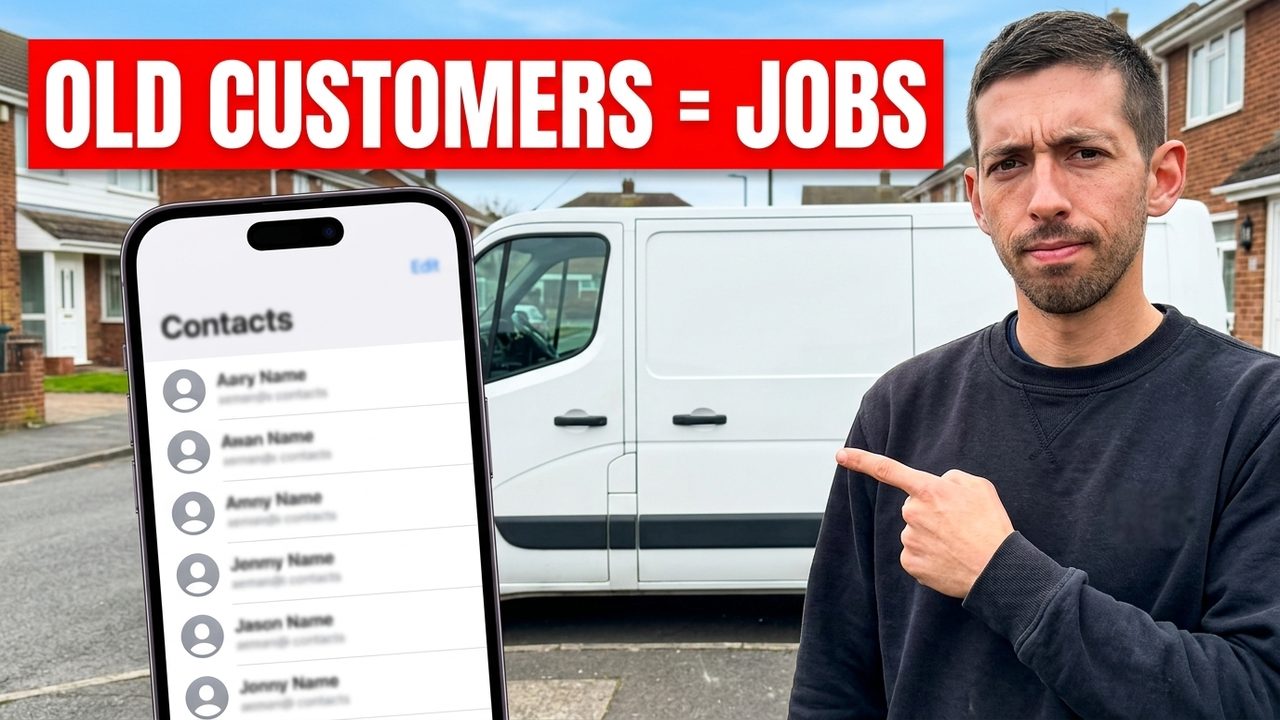
Watch it: your easiest jobs this year are already in your phone.
None of these charge you per enquiry. When a customer finds you on Google, lands on your site and sends a job request, there's no queue of four other trades ringing them at the same time.
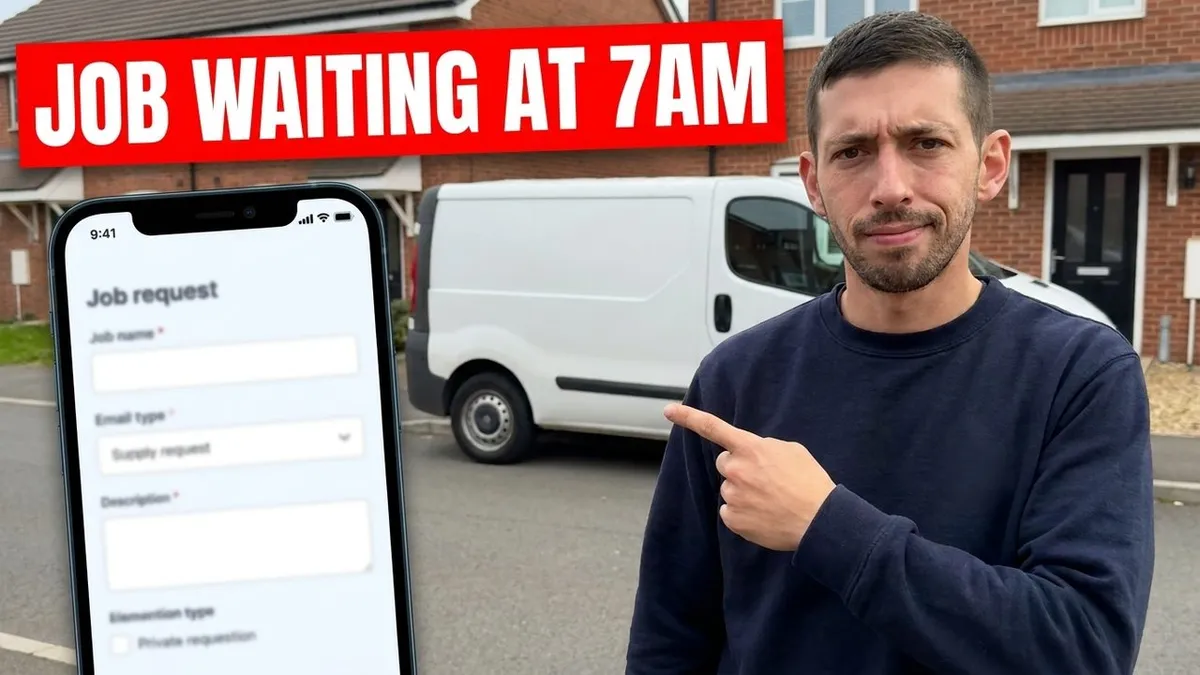
Watch it: the job request form and the booked job waiting when you wake up.
A simple plan for the next three months
Write down what you spent on shared leads last month and how many jobs you won from them.
Set your walk away rules and stick to them.
Ask every customer for a Google review. Here's how.
Get a website with a job request form, or add one to the site you have.
Text your old customers once in your quietest month.
After three months, do the sum again. If your own enquiries are growing, you can cut the lead spend back. If they aren't, you've lost nothing by trying.
Where we fit
Our Basic plan is a Smart Website with an online job request form for £99 a month, or £799 a year paid once. The Full System at £199 a month adds missed call text back, one inbox, AI chat that books, reminders, review requests and one free database reactivation campaign worth £500, which is the text to old customers done for you. No setup fee and no contract on either. You deal with Charlie directly, a real person in Medway, from the first call onwards.

Questions trades ask
Why do lead sites sell the same job to several trades?
Each site sets its own rules. Many let several trades pay for the same enquiry because the customer usually wants more than one quote. Ask how many trades can buy each lead before you sign up.
How do I stop competing on price as a tradesman?
Reply first, ask for photos, quote in writing the same day and show what's included. Over time, build enquiries from Google, your own website and old customers, where you're the only trade in the conversation.
Are shared leads worth it?
For some trades, some of the time. Do the sum: lead fees, your time and any discount, divided by the jobs you actually won. If the cost per job still leaves you a fair margin, carry on. If it doesn't, cut back.
What do I do when a customer just wants the cheapest quote?
Give a clear written price with options and say what's included. If they still only want the lowest number, let them go. Someone else can race to the bottom on that one.
If you want to see a job request form working on a real trade site, book a quick call and we'll show you one.
